
A walking pad is a compact, low-profile treadmill you’ll use for walking, often under a standing desk. Flat, rail-free models top out near 3.5, 4 mph, while 2-in-1 versions with rails go faster. Pick a belt at least 16 inches wide and 44 inches long if you’re six feet tall. Choose a weight rating 15, 20% above your body weight. Then confirm a continuous-duty motor rating. Below, you’ll see how top models compare on price and noise.
Key Takeaways
- Walking pads are compact, rail-free treadmills built for walking, typically topping out around 3.5, 4 mph and fitting under standing desks.
- Choose a belt at least 16 inches wide; users around six feet tall should look for 44 inches or longer.
- Pick a weight rating 15, 20% above your body weight, or at least 50 pounds higher, for safety and durability.
- Confirm a continuous-duty motor rating, separate motor warranty, and physical emergency stop rather than comparing price alone.
- Desk pads usually cost $150, $250, while incline models run $300, $450; quiet options near 45 dB suit shared spaces.
What is a walking pad
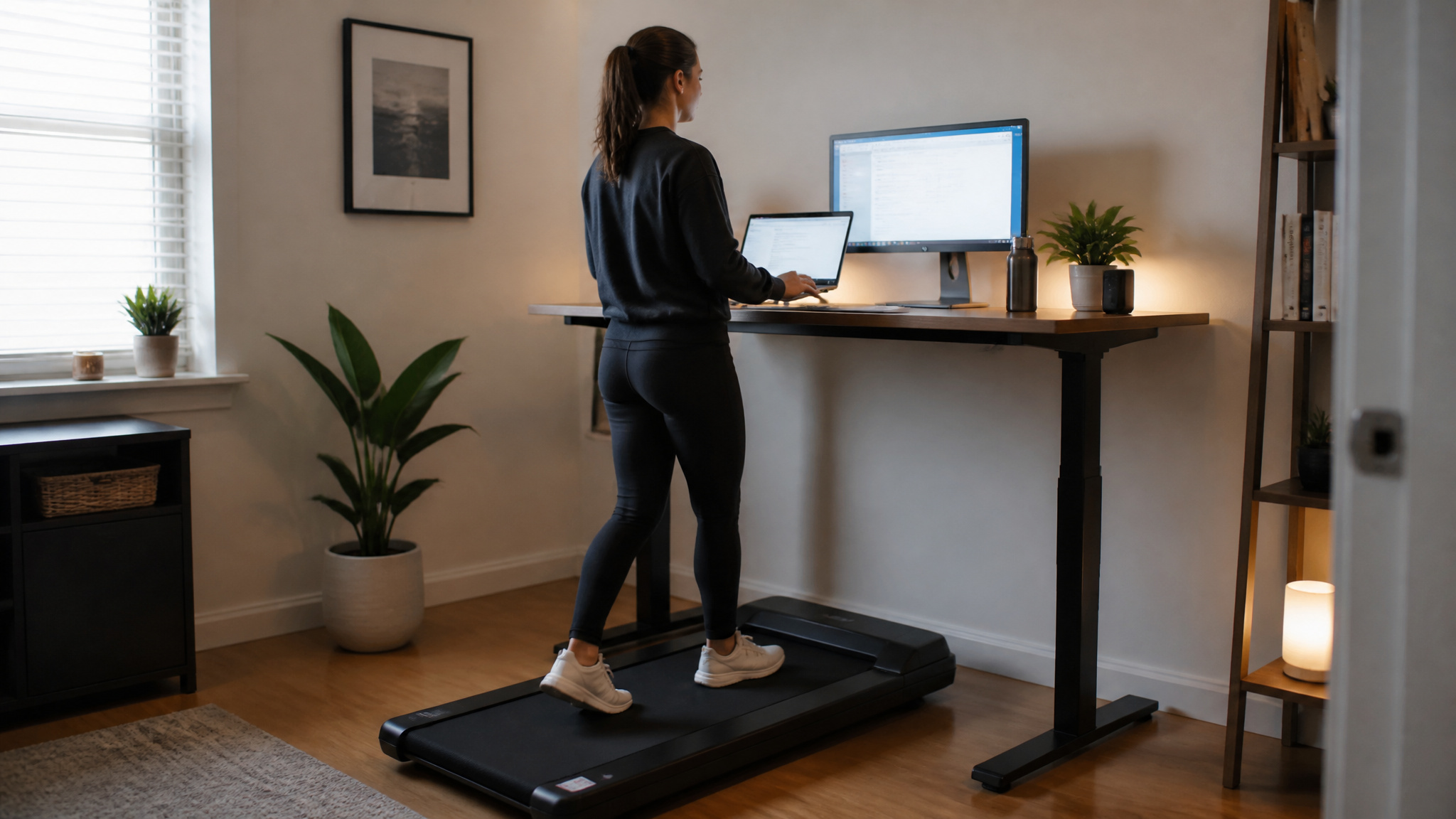
A walking pad is a compact, low-profile treadmill built mainly for walking rather than running. Most flat, rail-free pads fit under a standing desk, so you can keep moving while you work, then slide the machine under furniture when you’re done. These models typically top out near 3.5, 4 mph, which suits gentle desk walking and steady strolls. If you want brisk walking or light jogging, you’ll find 2-in-1 versions with folding or removable rails and higher top speeds. Some also add incline, though these features usually mean more weight and a larger footprint. Don’t take running modes on short, rail-free decks at face value; check the belt dimensions and intended use. Before buying, match the machine to your primary intended use.
How a walking pad differs from a traditional treadmill
A walking pad is slimmer, lighter, and more portable than a traditional treadmill, trading the treadmill’s rails, console, and higher speeds for a compact design, though both machines use a motorized belt. Most flat, rail-free pads top out near 3.5, 4 mph, so they suit under-desk walking rather than running. You’ll often control them with a remote instead of a built-in console. Their decks are usually shorter, too, so if you’re tall, check belt length carefully. One 2026 guide recommends at least 44 inches for six-foot walkers. Traditional treadmills generally offer higher speeds, steeper incline options, and more stable frames, but they take up more space and weigh more. A walking pad can slide under furniture or fold into a closet. If you want occasional jogging, consider a 2-in-1 model.
What features to look for when buying one
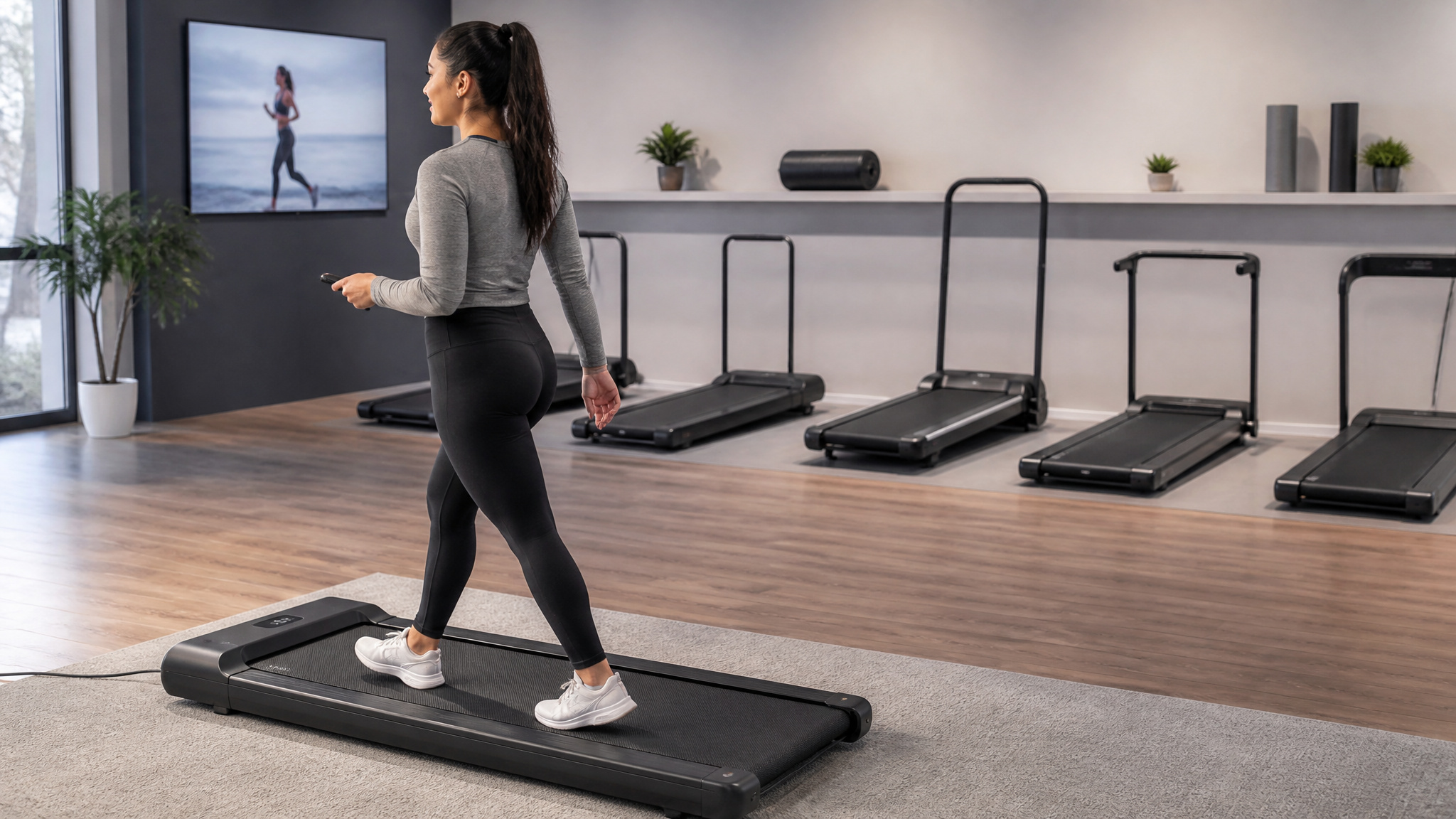
Look for the specs that determine whether a pad fits your body, your workload, and your routine: belt size, weight rating, speed range, motor power, incline, footprint, noise, warranty, and safety features. For the belt, aim for at least 16 inches wide, and if you’re around six feet tall, look for 44 inches or longer. Choose a weight rating with headroom, ideally 15, 20% above your body weight, or at least 50 lb above it.
Next, match speed to use. Desk walking needs slow settings, while brisk walking requires a higher top speed. Check that motor power is listed as continuous-duty, not just peak. Incline adds intensity without extra speed. Finally, measure the operating and stored footprints, aim for noise below 50 dB, and confirm separate motor warranty coverage plus a physical emergency stop.
How the top walking pads compare on speed, size, and price
Top walking pads differ most on speed, size, and price. Flat, rail-free pads usually top out near 3.5, 4 mph, while 2-in-1 models with rails often reach higher speeds but take up more space and weigh more. Desk pads typically cost $150, $250, and incline models run $300, $450.
| Category | Typical range |
|---|---|
| Speed | 3.5, 4 mph flat; higher with rails |
| Capacity | 220 lb slim; 400, 450 lb heavy-duty |
| Price | $150, $250 desk; $300, $450 incline |
Size varies too. If you’re around six feet tall, look for a belt of 44 inches or longer and at least 16 inches wide. Measure both operating footprint and stored dimensions, too. Incline ranges from none to 12% or more. Quiet models run near 45 dB. Don’t compare on price alone; check continuous-duty motor ratings and motor warranty coverage before you buy.
Who a walking pad is best for (home office, apartments, light use)
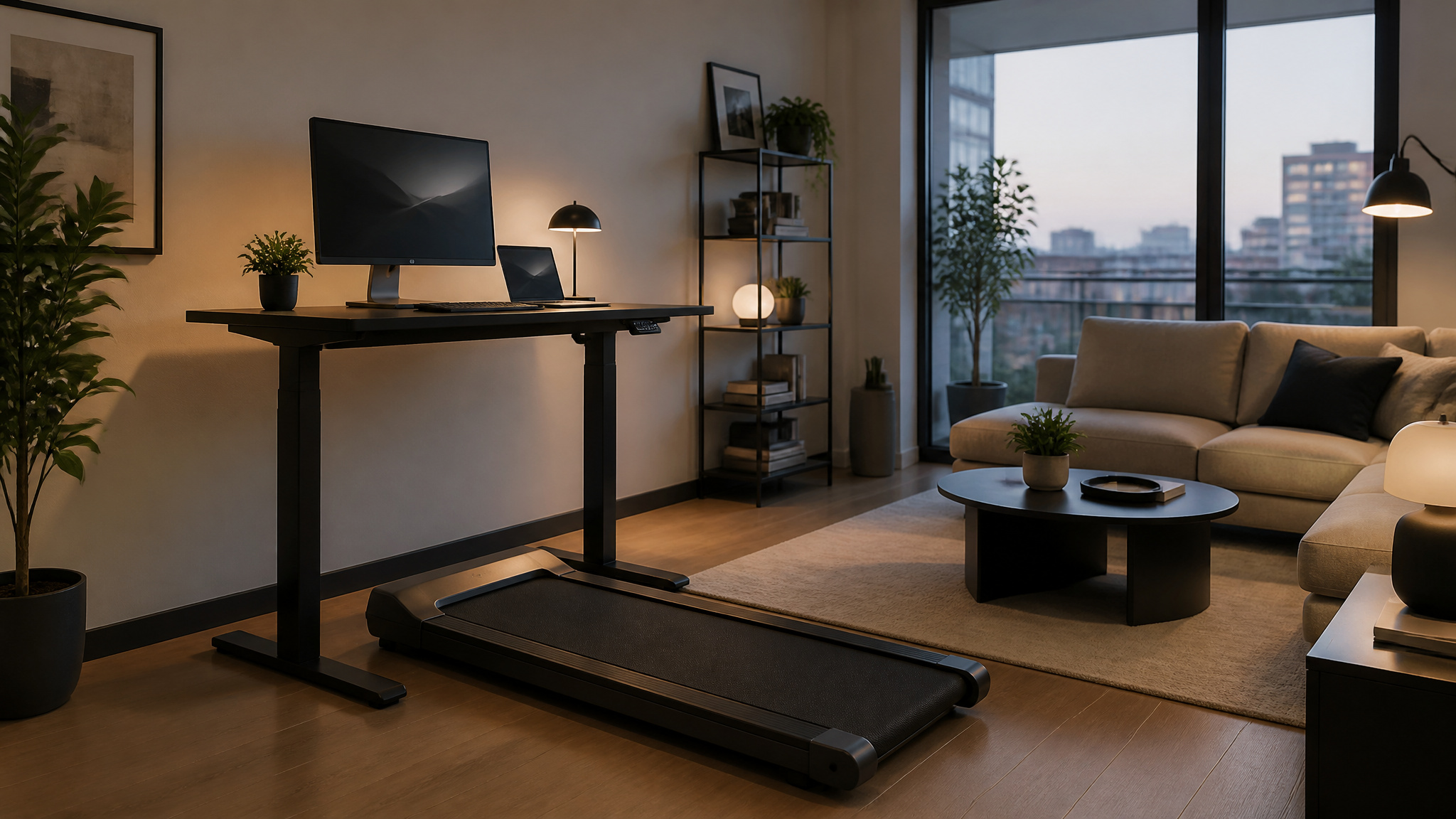
A walking pad is best for home office workers, apartment dwellers, and anyone who wants light, low-intensity movement, especially at a slow, steady pace during the workday. If you work from home, a flat, rail-free pad slides under a standing desk and lets you move gently through emails and calls. Look for models rated below 50 dB so your microphone doesn’t pick up motor noise.
Apartment dwellers benefit from slim pads that store under a couch or bed, or folding models that fit in a closet. Add a floor mat to reduce vibration reaching neighbors below.
A walking pad also suits light use. Most flat pads top out near 3.5, 4 mph, which covers casual and moderate walking. If you want brisk walking, jogging, or steep incline training, you’ll likely need a rail-equipped model with a longer deck and higher speed.
What the limitations of a walking pad are
The main limitations of a walking pad are lower speed, a smaller deck, and less sturdiness, since most models trade these for a compact footprint and are built for gentle movement, not serious training. Flat, rail-free models usually top out near 3.5, 4 mph, which limits brisk walking and rules out real running. Treat advertised jogging modes cautiously. Short decks leave little room for a longer stride, and if you’re around six feet tall, you’ll likely want a belt 44 inches or longer. Slim models may carry 220-lb weight limits, leaving less headroom than heavier-duty options. Many pads lack incline, so you can’t easily raise intensity without walking faster. Without a rail, you have less support when you’re distracted at your desk. Motor noise and floor vibration can also intrude on video calls, neighbors, or shared spaces.
How Steppa tracks your walking pad steps toward challenges
Steppa tracks your walking pad steps by using the step data your device captures, so your challenge progress reflects only what your tracker records. A wrist-worn tracker can undercount the steps you take on a walking pad because your arms often stay still on a keyboard during desk walking, and that gap directly affects your challenge totals. Accurate input matters. Use these checks before your next session:
- Move the tracker: clip a phone or pedometer to your waistband or pocket, where hip motion registers strides.
- Free your arms: take short breaks from typing to swing your arms and boost wrist-sensor accuracy.
- Compare readings: walk a timed session, then check your tracker’s count against the pad’s console, if it displays steps.
- Sync promptly: confirm your device’s data reaches Steppa before a challenge closes so no steps go uncredited.
Conclusion
A walking pad is one of the easiest ways to add light, steady movement to your day, especially under a standing desk, and choosing the right one really comes down to matching the specs to how you’ll actually use it. Start with fit and safety: a belt at least 16 inches wide (44 inches or longer if you’re around six feet tall), a weight rating 15, 20% above your body weight, and a continuous-duty motor rating backed by a separate motor warranty and a physical emergency stop. From there, match speed to your routine, flat rail-free pads near 3.5, 4 mph are perfect for desk walking, while a 2-in-1 model with rails makes sense if you want occasional brisk walks or jogging, and keep an eye on footprint and noise (near 45 dB) if you share space or live in an apartment. Budget roughly $150, $250 for a desk pad or $300, $450 for an incline model, and resist comparing on price alone. Pick the pad that fits your body, your workspace, and your goals, add a floor mat, and you’ll have a quiet, convenient way to turn ordinary work hours into extra steps for years to come.
Walk Anywhere and Qualify for Payouts
Walking pads, treadmills, or sidewalks all count the same when steps are tracked through Apple Health. Play Steppa connects your daily step goals to shared prize pools, with no penalties if you miss a day. Download on the App Store today.
Frequently Asked Questions
Can I Use a Walking Pad on Carpet or Uneven Flooring?
Check your model’s manual for its specific surface requirements, since this varies by machine. A floor mat can help reduce vibration transmitted through the floor and create a more even base. You’ll also want to confirm the operating footprint, verify the emergency stop works, and always start at a slow speed, then increase it gradually.
How Often Should I Lubricate and Maintain the Walking Pad Belt?
Follow your manufacturer’s manual, since lubrication and maintenance intervals vary by model and usage. Use the manual to find the recommended lubricant type, belt tension, and alignment steps. You’ll also want to review warranty terms, since motor coverage is a key durability check and skipping required maintenance could affect claims. Only service the pad unplugged and fully stopped. A floor mat can reduce vibration.
Will a Walking Pad Disturb Downstairs Neighbors in an Apartment Building?
It can, but you’ll reduce the risk with the right setup. Look for a pad rated below 50 dB; some quiet models run near 45 dB. Place a floor mat to cut vibration traveling through the floor. Start at slower desk-walking speeds, since faster paces mean heavier footfalls. Choose a stable deck with a weight rating that leaves headroom above your body weight, and avoid jogging on short, rail-free pads.
How Many Calories Can I Burn Walking on a Pad Daily?
You’ll typically burn about 150, 300 calories per hour at desk-walking speeds of 2, 3 mph, depending on your body weight, pace, and fitness level. If you weigh around 160 lb and walk two hours daily, you could burn roughly 300, 500 calories. You’ll burn more by raising speed gradually or adding incline, which increases intensity without faster walking. For more personal estimates, you can use a fitness tracker or heart-rate monitor.
Can I Safely Leave a Walking Pad Plugged in When Unused?
You’ll usually be safer unplugging it, and you should check your model’s manual for the manufacturer’s standby instructions. Unplugging cuts standby power draw, protects the motor and electronics from surges, and keeps kids or pets from starting the belt. If you’d rather leave it connected, use a grounded outlet or surge protector, switch off the main power, and remove the safety key or magnetic clip.